
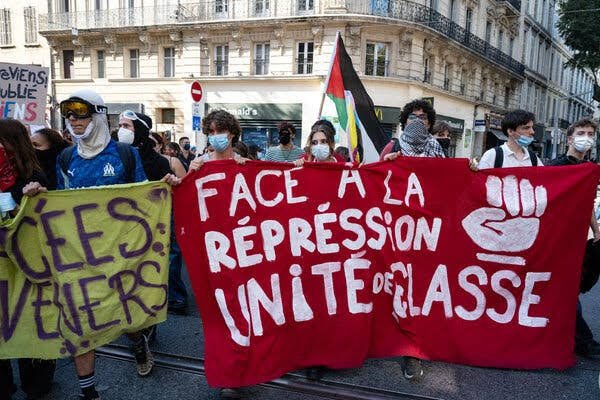

Oct 6,2026: More than 1,000 people were injured in France during large-scale high school students protests, Le Figaro newspaper reported on Monday, citing authorities.Student protests in France have shut down hundreds of schools after demonstrations against teacher shortages and rundown buildings turned violent.
Since late last month, protests have spread across the country, and clashes with police and school officials have resulted in hundreds injured. According to the report, 715 police officers and paramilitary police officers, as well as 215 students and 85 education system employees were injured. High school students in France have been protesting since mid-September against overloaded schedules, lack of teachers and other problems in education. In some cases, protests escalated into unrest. Thousands expected to join marches of support on Tuesday across the country amid growing concerns over police response.
Despite meetings with top country officials, students are not looking to slow the demonstrations and are calling for a National Day of Protests on Tuesday to keep up pressure.
Here’s what we know about the protests:
What started the demonstration?
The protests began Sept. 21 at a high school in a suburb of Paris over teacher shortages and deteriorating building conditions.
The complaints resonated with students across the country as the protests spread from city to city in France in the following weeks.
“Classrooms are not ventilated, and we can barely open the windows,” Issam Makhloufi, a French student at Rosa Parks High School in St.-Denis, told The New York Times.
Nearly 500 schools have been forced to close this month.
The protests have been supported by some teachers’ unions and leaders of the far-left France Unbowed political party, according to the Times, although its leadership denies sparking tensions among the students.
“The duty of a republic’s elected official is to protect young people and call for calm,” Prime Minister Sébastien Lecornu said on social media. “Exploiting their anger for partisan purposes is a fault.”
Bally Bagayoko, a member of France Unbowed, told the Times the protests were a result of a “considerable shortfall in the resources allocated for our children’s education.”
“The education authority is not investing enough in the suburbs. It’s classist and racist,” one student protester told Reuters.
France is gearing up for a presidential election next year, with incumbent President Emmanuel Macron term limited.
The protests turn violent
Thousands of minors have been arrested during these demonstrations.
Education Minister Édouard Geffray told France 2 at least 24 schools have been ransacked or set on fire.
Officials said the protests have caused millions of dollars in damage so far.
“Social unrest is legitimate, but it cannot be expressed through violence. I have therefore asked the attorney generals for a firm criminal response and the imposition of civil liability on the parents of minors whenever possible,” Gérald Darmanin, France’s justice minister, said on social platform X.
Students, police officers and school officials are among the more than 100 people injured from the demonstrations.
A 15-year-old reportedly lost his lower arm and hand after he picked up and detonated a police stun grenade, newspaper La Voix du Nord reported.
And the BBC reported at least one student lost teeth and others suffered eye injuries during the protests.
Police have used tear gas and other means to disperse the protests, but students are determined to push forward.
“Students and high school students, while the authorities seek to drive us out of our places of study through budget cuts, the closure of places, dilapidated buildings, selection, or repression, let’s not let them: let’s block and retake the universities and high schools!” two student unions wrote in a statement.
Human rights groups have spoken out against police tactics to quell the protests.
While Darmanin said parents could be held responsible, the country’s education minister has also met with student activists to attempt to calm tensions.
Geffray said he made promises to address the teacher shortages and create plans to include students in fixing the system, but organizers said the vague proposals weren’t enough.
“One of the difficulties of this movement is that there are no national demands. It all started with local demands,” Geffray said.
Students are now calling for more protests Tuesday and for others to join in their fight.
But the consequences don’t seem like they will be contained to France.
Some conservatives are blaming immigration policies in Europe for the violent protests.
