
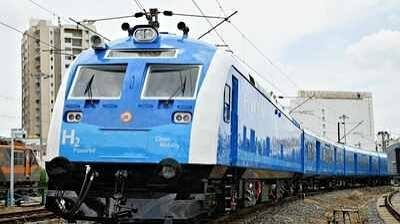

New Delhi, Jul 17,2026: Prime Minister Narendra Modi on Friday flagged off India’s first indigenously developed hydrogen-powered passenger train from Jind railway station in Haryana, marking a significant milestone in the country’s transition towards clean and sustainable transportation. Officially named the NaMo Green Rail, the zero-emission train places India among a select group of nations that have adopted green hydrogen technology for passenger rail operations.
The Prime Minister inaugurated the train during his visit to Haryana, where he launched a series of development projects aimed at strengthening clean mobility, connectivity, healthcare and cultural heritage. The hydrogen-powered train will operate on the 89-km Jind-Sonipat route, covering the journey in around two hours with stoppages at 12 intermediate stations.
In a post on social media platform X, Modi said, “Happy to be in Jind. Speaking at the launch of projects that strengthen clean mobility, connectivity, healthcare and cultural heritage. Together, they will improve ‘Ease of Living’ and accelerate Haryana’s development.”
In another post, the Prime Minister underscored the importance of transport infrastructure, saying, “Connectivity not only enhances convenience but also multiplies the pace of development.”
The 10-coach train has been developed using indigenous technology and represents a major step in Indian Railways’ efforts to adopt environmentally sustainable transport solutions. Unlike conventional diesel-powered trains, the hydrogen-powered train generates electricity onboard through hydrogen fuel cells, where hydrogen reacts chemically with oxygen to produce electrical energy. The only direct emission from the process is water vapour, making the train completely free of carbon emissions during operation.
Designed to accommodate around 2,600 passengers, the train will initially operate at a speed of 75 kmph, while its design permits speeds of up to 110 kmph. The project is expected to demonstrate the viability of hydrogen fuel technology in India’s railway network and pave the way for wider adoption of green mobility solutions.
The launch is seen as a significant boost to the Indian Railways’ long-term strategy of achieving net-zero carbon emissions while reducing dependence on fossil fuels. Green hydrogen has emerged as a key component of India’s clean energy transition, with the government promoting its use across sectors including transport, industry and power generation under the National Green Hydrogen Mission.
Hydrogen-powered trains are considered an emerging alternative for rail routes where full electrification may not be economically viable. Fuel-cell technology enables the trains to produce electricity onboard without relying on diesel engines or overhead electric lines, while significantly lowering greenhouse gas emissions and air pollution.
The inauguration of the NaMo Green Rail also reflects the government’s broader emphasis on modernising railway infrastructure, improving regional connectivity, and adopting cleaner technologies. Officials believe the successful deployment of the hydrogen-powered train will provide valuable operational experience and support future expansion of hydrogen-based rail services across the country.
The hydrogen train was among several development initiatives launched by the Prime Minister during his Haryana visit, with the projects collectively aimed at enhancing infrastructure, improving public services and accelerating economic growth in the state while advancing India’s clean energy and sustainable mobility ambitions.
