AllAccidentAgricultureArtAutomobileBankingBusinessCinemaCommerceCorporateCourtCricketCrimeCultureDefenceDeplomacyDevelopmentEconomicsEducationEntertainmentEnvironmentEssayFeatureFinanceGeneralHealthHistoryHuman rightsHuman storiesIndiaInformation TechnologyInternationalLawLiteratureMedicalNatural CalamitiesNatureObituaryPolicyPoliticsPsychologyReligionSchool Arts FestivalScienceSocial IssuesSpaceSportsTechnologyUncategorizedWorld
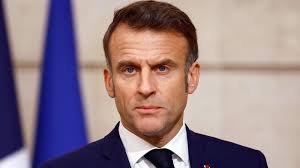
France’s Macron tightens curbs on protests, blaming hard left for unrest
PARIS, Oct 23,2026: French President Emmanuel Macron said on Thursday that “illegitimate” protests would be banned in the coming days and blamed “seditious” ultra-left groups and vandals for last weekend’s riots and looting.
Speaking after a meeting with intelligence chiefs and senior ministers, Macron said demonstrations organised by groups such as trade unions would be allowed to go ahead but could be diverted along alternative routes to protect businesses.
“Last Saturday we had political and seditious acts by ultra-left groups whose aim is to bring down the Republic,” he said.
His comments came as authorities across France prepared for fresh protests following some of the country’s worst urban unrest in years.
Justice Minister Gerald Darmanin said he wanted voting rights suspended for people who defy bans on taking part in demonstrations, and restrictions on social media access for people involved in violence, looting or attacks on police.
All protests planned for Saturday in Marseille and Lyon, France’s second- and third-largest cities, have been banned, local authorities said. Yet fresh demonstrations are already taking shape before what officials fear could be another volatile weekend.
France’s main student union, UNEF, has called for rallies on Saturday, while the Yellow Vest movement, the anti-establishment force that emerged in 2018, has filed plans for a march through central Paris.
Businesses in central Paris have begun boarding up their shop windows in case of violence. Luxury goods group Hermes said it had stepped up security measures at its French stores.
Organisers of the Art Basel Paris international art collectors fair being held in a central Paris exhibition hall said it would be closed all weekend.
Elsewhere, authorities in the northern city of Orleans were bracing for potential unrest as the far-right National Rally was due to hold an annual meeting and unions and left-wing groups planned demonstrations.
A student protest called for Thursday in Paris was initially banned but eventually allowed to go ahead, though metro stations in central Paris were nonetheless shuttered by transit authorities in anticipation of unauthorised gatherings.
France was rocked on October 17 by violence on the fringes of nationwide protests, exposing the depth of public anger and raising questions about the security services’ ability to keep order.
A third consecutive night of local curfews passed without major incidents in areas affected by the violence, offering the government some respite ahead of the weekend.
The unrest has laid bare a deeper malaise in France, where soaring energy costs, pressure on household budgets and concerns over deteriorating public services have fuelled growing frustration among workers and younger people.
The French political class has also descended into a bitter blame game, with the government accusing far-left political groups of stoking the unrest.
Highlighting investor unease, the risk premium on French government debt over safe-haven German bonds widened to its highest in 15 years on Thursday, while France’s benchmark 10-year bond yield hit 5.14%, its highest level since July 2002.

Karnataka seeks Rs 20,585 cr NDRF aid as drought loss crosses Rs 62,481 cr
Bengaluru , October 23,2026: Karnataka Deputy Chief Minister G Parameshwara has written to Prime Minister Narendra Modi seeking immediate central assistance of Rs 20,585.73 crore under the National Disaster Response Fund (NDRF), citing estimated losses of Rs 62,481.88 crore due to the severe Kharif drought affecting 57.93 lakh hectares in the state.In a six-page letter dated October 22, Parameshwara stated that Karnataka experienced one of its worst Kharif droughts, with the Southwest Monsoon 2026 recording 551 mm of rainfall against the normal of 852 mm, a deficit of 35 per cent. He noted that this was the second-lowest rainfall recorded since 1956 and the seventh-lowest since 1901.Of the 122 monsoon days, 79 witnessed deficit or large-deficit rainfall, severely affecting standing crops, the letter stated.
Following an assessment under the Manual for Drought Management, 2020, Karnataka has declared 226 taluks drought-affected, including 177 declared earlier and 49 additional taluks.Crop losses have been reported across 53.92 lakh hectares of crops and 4.01 lakh hectares of horticultural crops, with damage ranging from 33 per cent to 100 per cent, with the majority of affected crops suffering damage exceeding 50 per cent.Major affected crops were maize across 11.82 lakh hectares, red gram or tur across 10.12 lakh hectares, cotton across 6.68 lakh hectares, ragi across 5.56 lakh hectares and sugarcane across 4.88 lakh hectares. Other affected crops include green gram across 3.80 lakh hectares, soybean across 2.24 lakh hectares, paddy across 1.65 lakh hectares, mango across 1.26 lakh hectares, coconut across 0.87 lakh hectares, and red chilli and arecanut across 0.42 lakh hectares each.The state’s cumulative drought memorandum seeks Rs 6,128.70 crore towards crop-loss input subsidy and Rs 12,146.99 crore as gratuitous relief for 61.91 lakh small and marginal farmers at Rs 327 per day for 60 days.It has also sought Rs 1,727 crore for drinking water supply and repairs to water supply schemes, including Rs 1,130 crore for rural areas and Rs 597 crore for urban areas.Additionally, Karnataka has requested Rs 583.04 crore for animal husbandry-related measures, including 476 cattle camps, 583 fodder banks, veterinary medicines and fodder support.Highlighting the plight of 61.91 lakh small and marginal farmers, Parameshwara urged the Centre to consider the relief measures urgently to prevent farmers from abandoning agriculture due to the losses.The Deputy Chief Minister also flagged concerns over the continued use of the Agriculture Census 2015-16 for calculating input subsidies, stating that the data does not reflect current landholdings and could result in a shortfall of Rs 1,609.50 crore.He requested the Centre to use Karnataka’s FRUITS database for determining beneficiaries, stating that it is de-duplicated and aligned with Agri Stack.Seeking additional support to protect children and mothers during the period of scarcity, Parameshwara requested Rs 427.20 crore under the PM POSHAN scheme to provide nutrition support to schoolchildren during summer vacation in drought-hit taluks.He also sought Rs 70.96 crore under the Supplementary Nutrition Programme of Mission Saksham Anganwadi and POSHAN 2.0.
Quantum computing could generate up to USD 2.7 trillion in economic value by 2035: McKinsey
New Delhi, October 23,2026: Quantum computing could generate between USD 1.3 trillion and USD 2.7 trillion in economic value worldwide by 2035, but businesses need to invest in talent, technology and partnerships now to secure an early advantage, according to a report by McKinsey & Company.The report said quantum technology was moving from experimental projects towards commercial applications, with more than 300 organisations worldwide already working with quantum technology providers.The report warned that companies delaying investment risk losing access to the partnerships, talent and intellectual property needed to compete as the technology develops. It also highlighted potential security risks, as sufficiently advanced quantum computers could eventually break the public-key encryption systems used to protect sensitive information.“Waiting to invest is risky,” the report said, adding that companies could face serious security challenges when quantum computers reach the stage of being able to break existing encryption methods. McKinsey outlined three stages of development, from early commercial adoption to the establishment of competitive positions by 2035 and a wider quantum-enabled economy by 2040.
Investment in the sector is already increasing. Equity investment in quantum technology rose from USD 2.5 billion in 2024 to USD 13.3 billion in 2025, the report said. Combined revenue of quantum computing companies crossed USD 1 billion in 2025 and could rise to as much as USD 4.4 billion by 2028.The report estimated that the global market for quantum computing hardware, software and services could reach USD 60 billion to USD 100 billion by 2035. Quantum communication could represent a market worth USD 11 billion to USD 15 billion, while quantum sensing could reach USD 7 billion to USD 10 billion by the same year.However, McKinsey cautioned that the timeline remains uncertain because of manufacturing constraints, shortages of specialised talent and a lack of consensus on which quantum computing technology will scale most effectively.The report also identified cybersecurity, pharmaceuticals, chemicals and robotics as areas where quantum technology could create significant value. Quantum computing could generate up to USD 400 billion in value for the pharmaceutical industry and unlock up to USD 800 billion in the chemicals industry by 2035, it estimated.McKinsey further said businesses should focus on building partnerships, testing potential applications and developing internal expertise before large-scale quantum systems become commercially available. It added that quantum computing could also help address computing and energy constraints affecting the expansion of artificial intelligence (AI).

Om Birla to examine CEC impeachment motion
New Delhi, Oct 22,2026: Lok Sabha Speaker Om Birla on Thursday declined to comment on the proposed impeachment motion against Chief Election Commissioner Gyanesh Kumar, saying the matter would be examined when it formally came before him.
Asked about the proposed motion against Kumar, Birla said, “We will see when it comes,” leaving open the question of how the Lok Sabha would proceed if the motion were formally submitted and taken up under the applicable parliamentary rules. The issue comes amid an ongoing confrontation between the Opposition and the Election Commission of India over electoral processes, the revision of electoral rolls and allegations concerning the poll body’s functioning and impartiality.
Opposition parties have raised concerns over the conduct of electoral exercises and pressed for greater accountability and electoral reforms, with demands from sections of the Opposition for action against the Chief Election Commissioner. The removal of the Chief Election Commissioner is governed by stringent constitutional safeguards. Under Article 324(5) of the Constitution, the CEC can be removed from office in the same manner and on the same grounds as a judge of the Supreme Court.
The process requires parliamentary consideration under the prescribed procedure and the requisite special majority in both Houses. Any proposed motion would therefore have to clear the applicable procedural requirements before the question of removal could be taken up. Birla’s remarks did not indicate whether the proposed motion had been formally submitted or what decision he might take on its admissibility. His response suggested that he would address the matter at the appropriate stage rather than comment on its merits in advance.

Yamuna river clean-up: Foundation-stones laied for massive infrastructure projects worth Rs 9,000 crore
New Delhi , October 22,2026:: Highlighting a comprehensive strategy to clean and restore the Yamuna, Delhi Chief Minister Rekha Gupta on Thursday asserted that the government is advancing with a “scientific roadmap” to ensure a clean and uninterrupted river, backed by massive civic infrastructure projects worth nearly Rs 9,000 crore.Speaking to reporters here following the inauguration and foundation-stone laying of Delhi Jal Board (DJB) projects by Union Home Minister Amit Shah, the Chief Minister stated that the multi-crore overhaul fulfils decades-old demands of the capital’s residents.”Our goal is that every household in Delhi is connected to a sewer network, every drain is intercepted by a Sewage Treatment Plant (STP), and untreated waste stops flowing into the Yamuna. We are advancing with a scientific roadmap so that in a few years, we can gift the people of Delhi a clean, pristine, and perennial Yamuna,” Gupta said.
Citing the completion of the long-pending Chandrawal water project as a key milestone, the Chief Minister noted that the government has consistently scaled up water and sewerage investments over its 18-month tenure to fix the city’s foundational civic infrastructure.”Today is a day of immense joy for the people of Delhi. Projects worth nearly Rs 9,000 crore were either inaugurated or had their foundation stones laid today. These include works that citizens had been waiting for over years, laying new sewer lines, commissioning water treatment plants, setting up new sewage treatment plants (STPs), and connecting unsewered areas to treatment networks,” the Chief Minister said.She also extended gratitude to the Japan International Cooperation Agency (JICA) for partnering on critical infrastructure initiatives in the city.Speaking on the occasion, Delhi Minister Parvesh Verma detailed the scope of the projects, pegged at Rs 8,941 crore, stressing that clean Yamuna has shifted from an election slogan to ground-level delivery.
“In just 19 months of our government, land was allotted through the DDA, tenders were finalised and awarded, and work has begun on the ground. World-class agencies and international organisations such as JICA and the Asian Development Bank (ADB) are supporting these efforts. This has been made possible due to seamless coordination between the Delhi Government and the Centre under the leadership of Prime Minister Narendra Modi,” Verma said.He added that hundreds of unauthorised colonies and rural villages, which lacked basic civic amenities for decades, will now be connected to formal sewer and piped water networks.
India’s Crude Oil import bill rises 47% Y-o-Y in September
Oct 22,2026: India’s crude oil import expenditure jumped 47 per cent year-on-year (Y-o-Y) to $15.4 billion in September 2026, driven by a sharp increase in international oil prices amid escalating tensions in West Asia, according to data released by the Petroleum Planning & Analysis Cell (PPAC).
The increase in spending was significantly higher than the growth in import volumes. India imported 21.7 million tonnes (mt) of crude oil in September, up 7 per cent from 20.3 mt in the corresponding month last year.
The surge in the import bill coincided with a steep rise in crude prices. The Indian crude oil basket averaged $116.09 per barrel in September, compared with $69.61 per barrel a year earlier, highlighting the growing cost of meeting the country’s energy requirements.
Crude oil accounts for nearly a fifth of India’s total merchandise imports, making the country particularly vulnerable to fluctuations in global energy prices. Despite rising costs, India has continued to secure supplies to meet domestic demand amid disruptions to international energy trade.
Supply concerns have intensified following disruptions to shipping through the Strait of Hormuz and threats to traffic through Bab-el-Mandeb, a strategic maritime passage connecting the Red Sea and the Gulf of Aden. Both routes are critical to global energy transportation, and the disruptions have added pressure to supplies from West Asia.
Russia remained India’s biggest crude oil supplier in September, accounting for 35 per cent of the country’s total imports, according to maritime intelligence firm Kpler.
Iraq, Saudi Arabia, the United Arab Emirates (UAE) and Kuwait were among the other leading suppliers. Together, the five countries accounted for approximately 70 per cent of India’s crude oil imports during the month.
The rise in crude oil prices, coupled with lower earnings from petroleum exports, also pushed up India’s overall net oil and gas import bill.
The bill, which measures expenditure on imports of crude oil, liquefied natural gas (LNG) and liquefied petroleum gas (LPG), after accounting for revenue from refined petroleum product exports, climbed nearly 40 per cent year-on-year to $13.4 billion in September.
India spent $15.4 billion on crude oil imports and another $1.2 billion on LNG imports during the month. Meanwhile, petroleum product exports generated $4.8 billion in revenue. Petroleum exports declined 24.6 per cent year-on-year in September, further weighing on the country’s net energy trade balance.
The pressure on India’s energy import expenditure has also become evident in the first half of the current financial year.
Between April and September 2026, the crude oil import bill increased 46.4 per cent year-on-year to $90.6 billion. Over the same period, the net oil and gas bill rose 35 per cent to $81.1 billion.
The widening import bill underscores the impact of elevated global energy prices on India’s external trade finances, particularly as the country continues to depend heavily on overseas suppliers to meet its crude oil requirements.
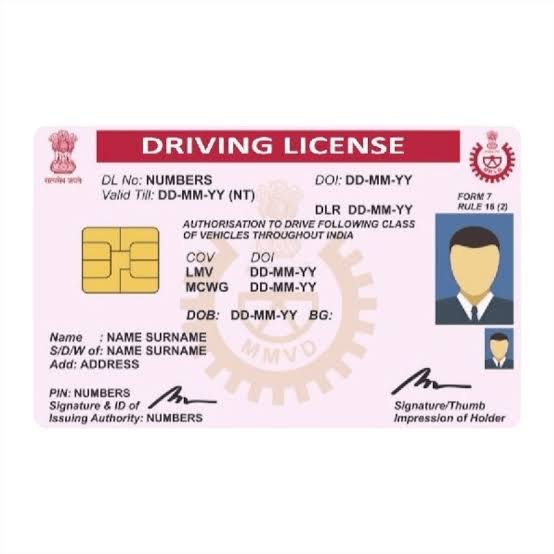
Centre has proposed major changes to driving licence rules
New Delhi, Oct 22,2026: The Centre has proposed major changes to driving licence rules, including abolishing fees for updating personal details, raising the minimum passing marks for the learner’s licence test from 60 to 75 per cent and introducing time-bound approval of applications for changes in licence particulars.
The Ministry of Road Transport and Highways has issued draft amendments to the Central Motor Vehicles Rules, 1989, proposing changes in licensing procedures, documentary requirements and fees for certain services. According to a notification , the government proposes to abolish the existing Rs 200 fee for changing the name or other particulars recorded on a driving licence.
Changes in residential address and updates to mobile numbers and email IDs would also be free of charge. The draft further proposes that no fee be charged for services availed through online Aadhaar authentication under the relevant driving licence fee provisions. In a significant proposal affecting new drivers, the minimum passing score for the learner’s licence test would be increased from 60 to 75 per cent. Applicants would also be required to complete an online safe-driving tutorial lasting at least 30 minutes.
The period for completing the tutorial after submitting an application would be extended from seven to 15 days. For existing driving licence holders, the ministry has proposed a time-bound mechanism for updating personal details through the online portal. Under the draft rules, licensing authorities would be required to approve or reject applications for changes in licence particulars within 15 days, with reasons for rejection recorded in writing and communicated to applicants. Significantly, applications for a change of address would be deemed approved if the licensing authority failed to accept or reject them within 30 days.
The government has also proposed revised documentary requirements for establishing the identity, age and address of driving licence applicants. Aadhaar cards, voter identity cards, passports, e-ration cards and specified government-issued identity documents would be accepted as address proof. Electricity and household gas bills not older than three months would also qualify as address proof.
PAN cards would be accepted as proof of identity, while passports, birth certificates, and educational certificates containing the applicant’s date of birth would be among the documents accepted for age verification. The proposed amendments also provide for separate driving licence card formats for Indian and foreign nationals, with licences issued or renewed in laminated or PVC card form. Another provision would allow motorists to permanently surrender one or more vehicle categories from their driving licences. Such categories would be deleted within 7 days of receipt of the application.
However, motorists surrendering a vehicle category would be ineligible to obtain a learner’s or driving licence for that category for one year from the date of surrender. The ministry has also proposed abolishing the prescribed fee for the specified change-of-residence-related vehicle registration service, including additional charges currently applicable for delays in submitting a No Objection Certificate.
The existing provision specifies additional charges of Rs 300 per month or part thereof for motorcycles and Rs 500 for other vehicles. The draft notification also proposes changes to medical fitness declarations, including additional disclosures concerning certain medical conditions, medication allergies and medical or surgical implants. The government has invited objections and suggestions from the public and stakeholders within 30 days from the date on which copies of the notification are made available.
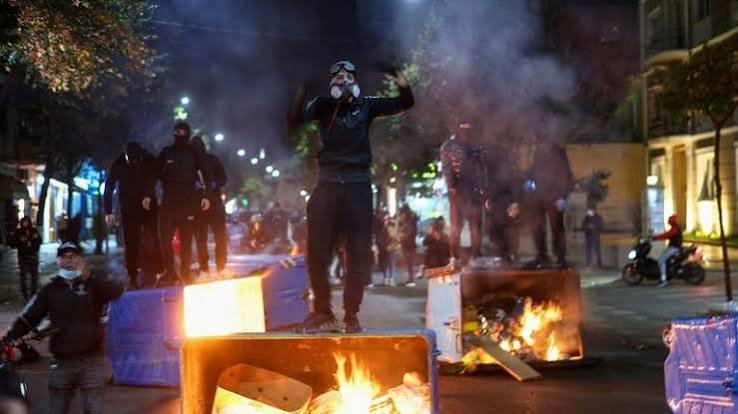
Albanian police clash with anti-government protesters for eighth day
Tirana, Oct 20,2026: Anti-government protests in Albania entered their eighth day on Wednesday, with Prime Minister Edi Rama warning that those responsible for damaging public property would be held accountable as the clashes between demonstrators and police escalated sharply. Compelled by the grave circumstances to issue statement after attacks on key state institutions in Tirana sent shockwaves beyond Albania, with protesters targeting the Supreme Court and financial institutions by hurling petrol bombs and rocks. Parts of the Supreme Court building were engulfed in flames, furniture was burned and case files were scattered.Banks were also attacked.
High school and university students demanding lower tuition fees, greater State investment in education, and protesting corruption in the education system, have joined a broader anti-government movement calling for the resignation of Socialist Prime Minister Edi Rama. For days, protesters have hurled rocks, flares, firebombs and fireworks at the police, who have used batons, water cannons and tear gas in clashes in the city centre.
Last day Prime Minister Edi Rama, in a meeting with high school leaders, stated that a package is being prepared, not only criminal but also administrative, emphasizing that those who damage and destroy will pay.
High school and university students demanding lower tuition fees, greater State investment in education, and protesting corruption in the education system, have joined a broader anti-government movement calling for the resignation of Socialist Prime Minister Edi Rama. For days, protesters have hurled rocks, flares, firebombs and fireworks at the police, who have used batons, water cannons and tear gas in clashes in the city centre.
Rama emphasized that anyone who damages what was built with citizens’ taxes will be pursued by the shadow of the state, which will demand compensation.
Albania is one of several European countries experiencing protests over rising fuel costs, discontent with the state of schools, declining public services and a housing crisis, including France and Italy. In Spain and Portugal, tent camps have sprung up to protest unaffordable housing, while a rally and a protest were also being planned in Greece on Tuesday (October 20) evening and Wednesday (October 21, 2026).
In Albania, the latest protests follow months of rallies organised by the so-called Flamingo movement, launched in opposition to a major luxury tourism development on Albania’s southern coast, linked to an investment firm founded by Jared Kushner, U.S. President Donald Trump’s son-in-law.
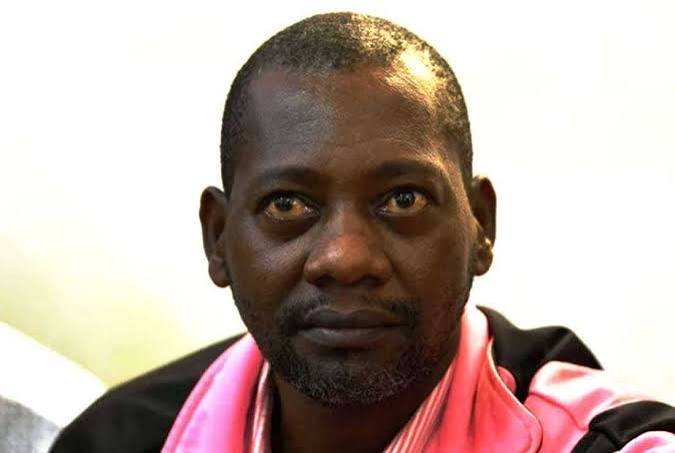
Kenyan starvation cult leader convicted of deaths of nearly 200 children
MOMBASA, Kenya, Oct 20,2026: Starvation cult leader Paul Mackenzie and 28 others were found guilty of murder by a Kenyan court on Monday over the deaths of 190 children and an adult in one of the world’s worst cult-related tragedies in recent history.
The preacher was arrested in 2023 after police received a tip-off, and weeks later authorities began uncovering bodies in shallow graves in the Shakahola Forest near the coast in southeastern Kenya.
Prosecutors say Mackenzie and his Good News International Church organised a Christian doomsday sect in which they ordered followers to starve themselves and their children to death to go to heaven before the world ended.
The case has gripped Kenya since the discovery of the mass graves.
It raised questions over how Mackenzie was able to continue to operate despite having been on the radar of the authorities since 2017 when his premises were searched by police. In 2019, authorities shut down Mackenzie’s church and he relocated to the Shakahola Forest, police said.
GRANDFATHER HAILS JUDGMENT
Mackenzie denied murder charges, saying he did not force the victims to starve, but the court rejected that argument.
He and the others convicted will be sentenced on November 6. Defence lawyer Lawrence Obonyo, who represents Mackenzie and almost all of the others convicted, said he had been instructed to appeal.
Francis Wanje, 62, lost eight family members including two grandchildren to the cult. He told Reuters that the judgment made him happy and gave him confidence in the judiciary.
“So many are going to learn from what has come up today. … You find churches everywhere, but they’ve got ill reasons for the churches. So it is good for members of the public to be very careful,” Wanje added.
HEARING LASTED MORE THAN EIGHT HOURS
In total, more than 400 bodies have been recovered from the Shakahola Forest.
Many of the children’s bodies were severely decomposed, with only 26 able to be identified, and investigations into the other deaths are ongoing.
Justice Diana Kavedza Mochache said in a hearing lasting more than eight hours that in some cases children were isolated and denied food while their parents watched.
The director of public prosecutions, Renson Ingonga, told reporters afterwards at the Mombasa High Court: “That is the best judgment we would ever get.”
MACKENZIE SILENT WHEN JUDGE CALLED HIM BY NAME
Mackenzie was in court, wearing a striped polo shirt and red trousers, sitting alongside his wife, one of the co-accused.
When his name was read out by the judge he was silent, staring into space.
The case has led to calls for tougher oversight of churches and other religious organisations in a country where religious faith plays a prominent role in public life.
Kenyan President William Ruto said in 2023 that government agencies should have been able to prevent the deaths. He said he took responsibility as president.
CHILDREN WERE FIRST TO STARVE
People with direct knowledge of the cult’s activities have told Reuters that Mackenzie planned the mass starvation in three phases: first children, then women and young men, and finally the remaining men.
A former taxi driver, Mackenzie forbade cult members from sending their children to school and from going to hospital when they were ill, branding such institutions as satanic, relatives of some of his victims told Reuters for a 2023 article.
Cult members lived in makeshift homes of polythene sheeting and thatch that Mackenzie divided into areas with biblical names like Jerusalem and Judea.
The plight of his followers began to emerge in mid-March 2023, when a local man told police that his brother and wife had starved their children to death in the forest on Mackenzie’s orders.
Mackenzie was arrested but released on bail, after which relatives say he brought forward the date on which he told his followers the world would end. Police arrested him again in April 2023 and started combing through the forest more systematically and began exhuming mass graves.
Mackenzie faces other charges over the forest deaths including terrorism-related ones, which he has denied.
Prosecutors say while he was in detention he also directed the deaths of 52 people in Kwa Binzaro village, which lies about 30 km (18 miles) from Shakahola. Mackenzie has pleaded not guilty in that case.
Elon Musk vows to give one of his SpaceX shares to every child in US in 2027
Oct 20,2026: SpaceX CEO Elon Musk said Monday that he’ll give every child in the U.S. one of his shares in the company next year.
Musk currently owns about 4.8 billion SpaceX shares, according to an August SEC filing. That figure rises to 6.4 billion when taking into account unvested awards and stock options, representing a 48.4% beneficial stake in the company.
There were 72 million children under 18 in the U.S. as of July 1, 2025, according to official census data.
That would amount to the CEO giving away about $10.5 billion worth of shares, taking into account SpaceX’s closing stock price of $146.03 as of Friday.
Musk’s financial giving has been in the news in recent weeks primarily for his political contributions.
The Tesla CEO has spent more than $276 million in donations to Republican groups since July, making him the biggest known donor of the 2026 midterm election.
When it comes to fulfilling his philanthropic promises, Musk has a spotty track record.
For example, the Tesla and SpaceX CEO contributed about $38 million to OpenAI, which he co-founded as a nonprofit research lab, between 2016 and 2020. But he had promised to contribute up to $1 billion, and cut off donations to the organization amid a battle with cofounders for control of the company.
In 2021, Musk said he would donate $6 billion to the United Nations World Food Program if it could show him a plan for how they’d use the money to “solve world hunger.” While the WFP posted a plan, Musk did not donate.
Musk’s foundation has also repeatedly fallen shy of making the minimum donations it’s required to by law, and as The New York Times previously reported, its donations go to charities that closely benefit Musk and his companies directly.
Musk’s post came just after Anthropic revealed plans to commit 5% of its shares to a new public benefit fund, with the stake potentially increasing as the company’s valuation grows.
In response to an Anthropic post on X about the fund on Sunday, Musk replied, “I recommend giving the shares directly to the public,” and added that’s what he’d be doing.
Subject to shareholder approval, Anthropic’s fund would immediately commit 5% of Anthropic’s shares, with the board adding, at its discretion, an additional 2% for every 50% increase in the company’s value above a set baseline that has yet to be disclosed.
The fund may be used to “explore large donations,” including to traditional nonprofits or as direct distributions for specific populations, or for “bolder approaches” to study and address AI’s disruption and displacement of jobs, the company said.
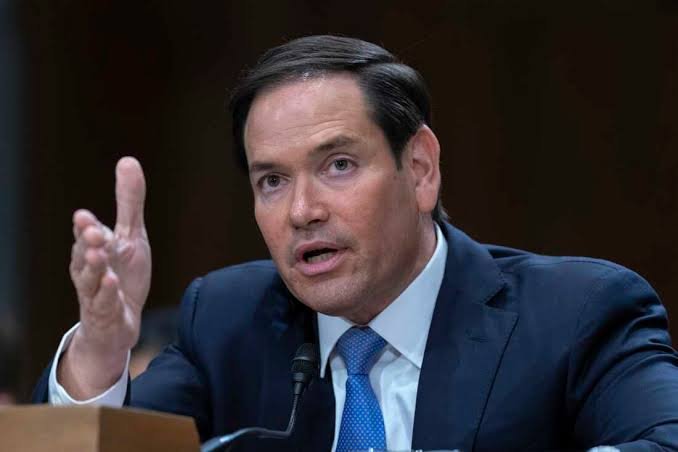
Rubio says Ukraine and Russia should be focused on ending the war
SAMARKAND, Uzbekistan, Oct 19,2026: Ukraine and Russia should be focused on ending the war between them, US Secretary of State Marco Rubio told reporters on his visit to Uzbekistan on Monday.
Asked about a possible meeting of US President Donald Trump, Russian President Vladimir Putin and Chinese leader Xi Jinping to negotiate an end to the four-year-old Ukraine conflict, Rubio said: “There’s been talks of a meeting. I don’t know whether it’s been finalized, but the president has been clear. He’d like the war in Ukraine and Russia to end.”
Rubio landed in Samarkand on Sunday night to meet top officials of the C5+1 grouping that brings together the United States and the Muslim-majority post-Soviet states of Uzbekistan, Kazakhstan, Kyrgyzstan, Tajikistan and Turkmenistan.
Trump hosted C5 leaders at the White House last November.
“We see nothing good coming from this war,” Rubio said. “We see a lot of downside to it, including the very real risk of escalation and spread of this thing… into another country because of a failed sabotage attack, because of drones that are hit with electronic warfare and they wander into a neighbouring country.”
The US has been trying to mediate a peace deal to bring the Ukraine war to an end and Trump has since clinched a diesel import deal with Russia and waived some sanctions on Moscow, which he said should keep the Kremlin at the negotiating table.
The moves were criticized by Ukraine’s President Volodymyr Zelenskiy. A fresh Russian air strike killed a woman in Ukraine’s Kyiv overnight while also hitting a subway station and damaging a 25-storey residential building.

France reels from violence; 1,800 arrested
PARIS, Oct 19,2026: President Emmanuel Macron turned down his interior minister’s offer to resign, telling him instead on Monday to put an end to barricades and looting and be transparent over intelligence failings, as France licked its wounds from weekend rioting.
The protests follow weeks of student demonstrations with occasional bouts of street violence, rocking the country six months ahead of its next presidential election and increasing pressures over a weak economy and surging debt.
Fears of tensions inside Macron’s fragile government over apparent security shortcomings — coming just as the government needs to pass a much-needed budget bill to rein in its finances — are set to further unsettle investors.
At the weekend, hundreds of thousands took to the streets to protest over what many say are declining and dysfunctional public services that leave citizens to fend for themselves amid cost-of-living pressures.
In many places including the capital Paris, Marseille and the city of Lyon, peaceful protests were quickly hijacked by rioters, leading to scenes of vandalism and chaos.
INTELLIGENCE FAILURES
France deployed 60,000 police and other security forces on Saturday, Interior Minister Laurent Nunez told France Inter radio, but acknowledged that wasn’t enough to control violent crowds in “certain cities”.
Macron’s presidential office, the Elysee, said on Monday that Nunez, a former Paris police chief, offered the president his resignation following the riots.
Macron refused, but urged Nunez to urgently come up with new concepts “to put an end to the barricades and looting,” the Elysee said.
France wakes up to destruction
France was left counting the cost of a night of violence after protests over the rising cost of living spiralled into looting, arson and clashes with police. By Sunday, streets across several cities were littered with burnt debris, smashed shopfronts and damaged vehicles, while authorities reported around 1,800 arrests nationwide.
‘It’s like we had a war’
In central Paris, the damage was difficult to ignore. Burnt barricades and debris marked streets where protesters had clashed with police. “It’s like we had a war,” 78-year-old resident Mehmet Ozeden told AFP. The capital’s deputy mayor, Lamia El Aaraje, said the city had witnessed an unprecedented level of violence.
Fire guts Limoges’ historic town hall
The violence reached beyond Paris, leaving a historic landmark in Limoges destroyed by fire. The city’s 19th-century town hall was deliberately set alight, local prefect Maurice Barate told news channel LCI. Firefighters brought the blaze under control only early Sunday. In Lyon, clashes and looting also left residents and businesses counting their losses.
Macron faces mounting pressure
President Emmanuel Macron faced renewed political pressure as the unrest unfolded just six months before elections to choose his successor. He had vowed that those responsible for vandalism and looting would face prosecution and punishment. Macron was scheduled to address the nation on Sunday evening after meeting key ministers to discuss the crisis.
Trump blames immigration
US President Donald Trump on Sunday (Oct 18) linked the unrest to immigration and called for tighter border controls. “France is burning!” he wrote on Truth Social, urging the country to close its borders. His comments followed similar remarks by Vice President JD Vance a day earlier, adding an international political dimension to France’s domestic crisis.
The human cost of the unrest
The damage extended beyond buildings and businesses. Interior Minister Laurent Nunez said around 500 police officers, firefighters and paramedics were injured during the protests. A 17-year-old boy lost his right hand after a crowd-control grenade exploded in Saint-Etienne. One person died during the main Paris march, although officials said the death was health-related and unrelated to the violence.
ISRO developing LOX-Methane engine, conducts crtical tests
Chennai, Oct 19,2026: The Indian Space Research Organisation (ISRO) is developing LOX-Methane Engine (LME 100) for future launch vehicles, having identified it as the primary propulsion systems for its Next Generation Launch Vehicle (NGLV) and also the future heavy lift launch vehicle required for the Indian crewed lunar landing mission targeted for 2040.
The integrated LME1100 engine is targeted to be ready by the middle of next year and will be subjected to a series of hot tests to qualify the same for the prescribed operating conditions including different thrust throttling profiles. Concurrently, the design activities towards the development of a 2400kN LOX-Methane engine are also completed, which is based on the Full Flow Staged Combustion Cycle (FFSCC).
The 2400kN engine will enable the development of a future heavy lift human rated launch vehicle for crewed lunar landing missions, ISRO said. As globally, liquid propulsion systems have witnessed a shift towards LOX-Methane engines, considering the clean combustion, low maintenance (useful for reusability) and the ability to be synthesized on Mars from CO2 and water ice (useful for future Mars missions and human colonization), ISRO, considering the potential of LOX-Methane propulsion systems in future launch vehicles, ISRO initiated development activities in this area in 2019, to understand critical aspects of liquid oxygen-liquid methane (LOX-methane) propellants combination on engine operation. A a 20-ton thrust technology demonstrator engine (designated as LM20-TD engine) was developed & tested using the existing CE-20 LOX/LH2 cryogenic engine subsystems during the 2019-2020 timeframe. Suitable modifications were carried out in the propellant flow control system and the engine start-up system of CE20 engine to convert the engine to the demonstrator engine.
The demonstrator engine operated on the gas generator cycle with major subsystems including Thrust Chamber, fuel rich gas generator, Fuel Turbopump, LOX Turbopump, Igniter, Start-up system, Control components, Flow control elements, mixture ratio control valve with electric drive. The design adequacy of all subsystems was assessed through theoretical analysis prior to the development tests. Test sequence was derived using an in-house developed mathematical model. The existing cryogenic engine test facility at IPRC was augmented for the purpose of testing the LM20 demonstrator engine and one cold flow test and five hot tests were carried out successfully. With the data obtained from these tests, vital inputs were derived on chill down characteristics, thrust chamber and gas generator ignition, engine starting, combustion and rotor-dynamic systems performance for a LOX- Methane engine.
The inputs derived from the Technology Demonstrator engine have been gainfully utilized in the design of LOX-Methane engine that is under development in ISRO. In 2023, ISRO formally initiated the development of key technologies for a 1100kN LOX-Methane engine (LME1100), that focused on the development & validation of key technologies leading to the different subsystems of the engine viz. turbopumps, igniter, gas generator and thrust chamber. LME1100 engine is designed as a Gas Generator Cycle (GGC) based engine where the design is optimized for industry friendliness and cost effectiveness. With the active involvement of industrial partners across the nation, more than 70% of the LME1100 engine components have been realized through Additive Manufacturing.
The Gas Generator (GG) is realized through additive manufacturing and is under qualification tests at IPRC. The sub-scale version was subjected to extensive testing at lab level to derive the ignition sequence using the spark torch igniter and to characterize the additively manufactured injector elements during ignition. The first ignition test of the full-scale Gas Generator was successfully carried out on October 9, 2026 and a series of similar tests are planned to evaluate the performance under different conditions. Sub-scale thrust chamber hot test campaign was also carried out. The test series was used to demonstrate the novel realization techniques planned to be eventually adopted in the full scale thrust chamber. The hot test campaign was also used to characterize the injector elements designed for LME1100 thrust chamber in actual operating conditions for varying design and operating parameters.
The hot test campaign carried out at IPRC not only helped in finalizing the optimal injector configuration, but also helped in demonstrating the working of oxidizer rich and fuel rich spark torch igniters. The LOX and Methane turbo-pump systems are also realized through various industries across the nation and the hardware are under different levels of sub-system testing at LPSC and IPRC. The 3D printed LOX pump impeller was subjected to spin test up to the rated operating speed at LPSC.
Dynamic sealing systems and turbo-pump bearings have also been realized through Indian industries and are under qualification testing at LPSC and IPRC. Cold flow characterization of the integrated turbo-pump systems are under progress at IPRC. The sub-system testing activities were initiated with the ignition trials and extensive testing of the GOX-GCH4 based spark torch igniter. Both oxidizer rich and fuel rich versions of spark torch igniters were developed and tested successfully.
Alternatively, an igniter using a semiconductor-based spark plug was also developed by LPSC along with VSSC and the Indian Institute of Space Science & Technology (IIST). Laser based ignition system has also been developed at LPSC and has been successfully demonstrated in igniting GOX-GH2 and GOX-GCH4 propellant combinations.
India’s Aditya-L1 and Europe’s Proba-3 join forces to decode the Sun’s violent eruptions
Chennai, Oct 18,2026: The Indian Space Research Organisation (ISRO) said the first joint analysis of Coronagraphs on India’s Aditya-L1 and Europe’s Proba-3 has decodeed Solar eruptions near their birthplace, In an update, it said for the first time, scientific observations of the same solar eruptions by Aditya-L1 mission and Proba-3 have been jointly analyzed and published.
Scientists at the Indian Institute of Astrophysics (IIA), Bengaluru, combined observations from the VELC payload onboard Aditya-L1 and the ASPIICS payload onboard Proba-3 to study coronal mass ejections (CMEs). They measured the mass, density, and energetics of these CMEs in the region very close to the Sun and the study has been published in the prestigious journal Astronomy & Astrophysics. On the importance of this analysis, it said CMEs are large eruptions from the Sun in which huge amounts of magnetized plasma are thrown out into interplanetary space. When such eruptions are directed towards Earth, they can disturb the near-Earth space environment.
Measurements of CME parameters near the Sun are very valuable for understanding the physical processes that shape CME properties and subsequent evolution. However, observing CMEs very close to the solar disk is challenging, and earlier space coronagraphs only partially succeeded in observing them and could not track the early evolution of faint CMEs. As a result, how CME energy is shared between kinetic, thermal, and magnetic in the inner corona has remained poorly constrained. Combining Aditya-L1/VELC and Proba-3/ASPIICS shows potential for a better understanding of it. Aditya-L1, India’s first dedicated solar mission, was launched by PSLV-C57 on September 2, 2023.
The spacecraft was successfully placed in a halo orbit around the Sun-Earth L1 point on 6 January 2024. This special vantage point facilitates uninterrupted observation of various solar phenomena. The Visible Emission Line Coronagraph (VELC) was developed by IIA, Bengaluru, in close collaboration with ISRO. VELC takes the spectroscopic observations of the solar corona from 1.05 to 1.5 solar radii in the 5303 Angstrom green coronal line. Proba-3, a mission of the European Space Agency (ESA), was launched by PSLV-XL from Sriharikota on December 5, 2024. It is the world’s first precision formation-flying mission. Two spacecraft fly about 150 meters apart, and one casts a shadow on the other.
This creates an artificial solar eclipse in space, allowing the ASPIICS coronagraph onboard Proba-3 to image the corona from about 1.1 to 3 solar radii in white light and in the 5303 Angstrom green coronal line. The coronagraph onboard Aditya-L1 (VELC) and Proba-3 (ASPIICS) conducted joint observations of almost the same part of the solar corona in two different types of observations (spectroscopic from VELC and imaging from ASPIICS). These joint observations provide deeper insights into CME evolution than observations from a single spacecraft alone. ASPIICS white-light and green coronal emission line observations provide sharp images that enable accurate estimates of a CME’s shape, dynamics, and mass. VELC spectroscopic observations in the green coronal emission line provide information on CME gas at about two million degrees. This gives independent estimates of the CME’s density and thermal energy.
The two instruments share a common field of view in the low corona. The team found that only two CMEs, on 14 and 16 September 2025, were recorded simultaneously by VELC and ASPIICS from July to December 2025. In both cases, VELC caught the eruptions at an early stage, demonstrating how the two instruments complement each other. On the key findings, the Indian Space Agency said two behaviours were observed in two CMEs. The September 14 CME was fast (about 645 km/s), while the September 16 CME was much slower (145 km/s). The density of the latter CME dropped more steeply with height than that of another CME, indicating its stronger early expansion.
Estimates of mass and thermal energy from ASPIICS and VELC agree well, despite the two instruments using different geometric assumptions, physical considerations, and observation types. In the September 14, 2025 CME, thermal energy was only about 1% of the total, while in the September 16, 2025 CME, thermal energy grew until it matched kinetic energy. The estimated magnetic energy is comparable to or greater than the kinetic energy. The results demonstrate the scientific potential of synergetic ASPIICS and VELC observations to constrain the CME mass, density, and energetics in the inner corona, thereby providing new observational constraints on the early evolution of CMEs.
The study shows that pairing a coronagraph that images the corona with one that measures its spectrum yields a more complete, cross-checked view of the origin and evolution of CMEs. This study was led by researchers from the Indian Institute of Astrophysics along with other European and American solar physicists. The work shows the growing scientific impact of Aditya-L1 and the strength of coordinated observations and associated international cooperation in solar astrophysics and space science.
‘Never feared competition’: Reliance responds to Elon Musk’s statement
Oct 16,2026: Mukesh Ambani’s Reliance Industries on Friday responded to Elon Musk’s recent remarks about the Indian market and its role in Starlink’s entry into the country, saying it has never feared competition and that every player must abide by Indian laws and policies.
In a statement, Reliance said it welcomed competition in satellite communications, including from Starlink.
It also said all companies, Indian or foreign, must follow the same regulatory process, pointing out that Jio’s satellite services were also awaiting clearances.
The response follows Musk’s remarks accusing the Indian government of favouring established telecom operators over competing players.
The dispute resurfaced after Lauren Dreyer, SpaceX’s vice-president of Starlink Business Operations, told attendees at the India Mobile Congress (IMC) 2026 that the company was ready to begin operations in India but was waiting for regulatory approvals.
“In light of recent remarks about Reliance and the Indian market, we wish to place the facts on record. Like every Indian enterprise, Reliance has grown in an India that welcomes investment and innovation, homegrown or international, that improve the lives of the people,” Reliance Industries said in a statement on Friday.
The company also defended its record on competition, highlighting Jio’s entry into the crowded Indian telecom market in 2016 without any existing customers. It said Jio had since attracted more than 530 million subscribers and helped make digital connectivity more affordable.
“At Reliance, we have never feared competition. We see it as the truest test of who serves the customer best. Jio itself entered India’s crowded telecom market in 2016 as the newest player, with not a single customer. In just ten years, Jio has earned the trust of over 530 million customers and given Indians some of the best digital infrastructure and most affordable data in the world,” the company stated.
Musk first alleged on his social media platform, X, that Starlink was being blocked by certain “oligarchs” keen to keep a “monopolistic chokehold” on Indians.
India’s ministry of communications hit back the next day, calling any suggestion that the framework or its application was unfair or discriminatory “baseless and misconceived” and that the security assessment of the three entities was underway, with all at “broadly the same regulatory stage”.
On October 8, the communications ministry rejected the charge, calling suggestions of discrimination “baseless and misconceived.” It said India’s satcom framework was fair and non-discriminatory,
Hours later, Musk escalated his attack, saying Starlink was licensed to operate in more than 165 countries and had spent five years complying with Indian rules. “So why still no licence? Is Ambani the real boss of India?” he asked, referring to Reliance Industries chairman Mukesh Ambani.
Ahead of Musk in queue: Sunil Mittal
Bharti Airtel chairman Sunil Bharti Mittal on October 14 said his satcom venture Eutelsat OneWeb is significantly ahead of Musk’s Starlink in the satcom queue in India, with the licence applied five years ago, and added that he would be happy to receive the go-ahead at least a few days before the US tech billionaire.
“I think I am significantly ahead in the queue from him. I applied five years back,” Mittal said at the Bloomberg New Economy Forum 2026.
EU leaders rally around Zelenskiy as Trump calls Ukrainian strikes on Russia a ‘disgrace’
BRUSSELS/KYIV, Oct 16,2026: European Union leaders rallied around President Volodymyr Zelenskiy at a summit on Friday as US President Donald Trump fired another salvo at Ukraine, calling its strikes on Russian refineries a “disgrace”.
The EU is hosting Zelenskiy in Brussels at one of the most difficult moments for Ukraine, with missiles and drones raining down on Ukrainian cities and fears that the US could pull back intelligence sharing and weapons support from Kyiv.
Trump blindsided Zelenskiy last weekend by announcing that Ukraine and Russia had agreed not to target each other’s energy facilities. Facing US midterm elections in November, Trump has blamed Ukrainian strikes on Russian refineries for pushing up energy prices that could cost him at the ballot box.
The US has also struck a diesel deal with Russia, angering Ukraine and European allies.
“We want to end this war as quick as possible. We don’t see now signals from the Russian side that they are ready for this, to end this war. That’s why we have to prepare for the winter,” Zelenskiy said as he arrived at the summit, hugging many of the leaders as he met them.
“The winter package is not only energy, it’s also air defence and funding,” Zelenskiy said.
In the latest attacks, Russian drone strikes on the city of Kharkiv killed three people, while strikes elsewhere left hundreds of thousands of people without power.
In an interview, Estonian Prime Minister Kristen Michal told Reuters that the EU would probably have to provide a new loan to Ukraine to help cover its budget gap for next year.
NO READY-MADE EUROPEAN ALTERNATIVE TO STARLINK
Ukraine’s leadership has been alarmed by disruptions to the SpaceX Starshield satellite system used by Kyiv for battlefield communications and drone operations. A source in Ukraine’s defence ministry said on Thursday that Starshield receptors were only working at speeds of up to 100 miles per hour (160 kph), complicating their use for military missions.
A US official has denied that Trump ordered a deliberate slowdown of Starshield, which is the military-grade version of the Starlink service operated by Elon Musk’s SpaceX, and Trump said this week intelligence sharing with Ukraine continued.
Europe does not have a ready-made alternative to Starlink, although European governments and companies are working on long-term options.
“Starlink is really necessary for Ukraine. And unfortunately, in short term, Europe can’t replace this capability,” said the EU’s foreign policy chief Kaja Kallas.
“We are working on the new sanctions package to put the pressure on Russia, and we of course hope that we do this with all our partners around the world,” she added.
Ukraine struck a Russian oil refinery after Zelenskiy declared that Kyiv was abandoning the energy ceasefire that Trump had announced.
“All he’s doing is making the world oil price higher. Well, I think that’s a disgrace,” Trump said in an interview with the Newsmax news outlet.
While EU leaders hit out at the US deal to buy Russian diesel, they are also grappling with how to tackle energy prices that have soared since the Iran war, exposing divisions between member states on day one of the summit on Thursday.
Zelenskiy told Reuters earlier this month that Ukraine had agreed a plan with European partners that would allow it to close a $27 billion deficit in its military spending for this year, allowing it to order the drones needed to continue fighting at the start of 2027.
However, Finance Minister Sergii Marchenko said recently Ukraine still faced an unfunded budget gap for next year of $32.6 billion – and that does not include an estimated $40 billion in direct military supplies from allies.
“I am unhappy with the number of countries that have been willing to pledge new financial support to Ukraine,” said Dutch Prime Minister Rob Jetten.
Sounding a more sceptical note, Austrian Chancellor Christian Stocker urged caution in the debate over making new, far-reaching financial commitments to Ukraine.
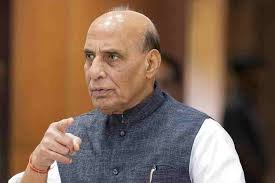
Rajnath Singh accuses Congress of seeking Bangladesh-style power change through violence
Lucknow, Oct 16,2026: Defence Minister Rajnath Singh on Friday accused the Congress of seeking to destabilise the country and bring about a change of government through violence, alleging that its protests against Chief Election Commissioner Gyanesh Kumar and the Special Intensive Revision (SIR) of electoral rolls were part of a broader attempt to weaken democratic institutions.
Addressing a press conference here, Singh alleged that the Congress’s opposition to the Election Commission and the SIR exercise was not merely about electoral processes but is aimed at undermining the democratic system and removing the government from power. He accused the opposition party of seeking to adopt the “Bangladesh model” of changing governments through violence. Referring to the events of 1993, when the Congress government, led by Prime Minister P. V. Narasimha Rao, expanded the Election Commission of India from a single-member body to a three-member body, the Defence Minister accused the Congress of attempting to influence the Election Commission during its tenure.
He alleged that the party had made overnight changes to the Commission in 1993. He said the then chief election commissioner had written to the president recommending the removal of Election Commissioner Navin Chawla. Chawla was subsequently elevated to the post of chief election commissioner during Congress rule, Singh said. Singh stated that before 1993, there was no system of voter ID cards for voter identification. He claimed that after the introduction of voter ID cards, the Congress was unable to form a government at the Centre on its own. Citing these examples, he accused the Congress of political interference in electoral institutions and questioned its stance on the independence of the Election Commission.
He further alleged that the Congress’s current opposition to the Special Intensive Revision (SIR) and Chief Election Commissioner Gyanesh Kumar goes beyond these specific issues, reflecting a broader attempt to weaken independent constitutional institutions. “In a democracy, the opposition has the right to protest against government policies, but no one has the right to resort to violence,” Singh said. Singh also targeted Rahul Gandhi, the Leader of the Opposition in the Lok Sabha, accusing him of pursuing what he called the “politics of disruption”.He alleged that the Congress is turning issues involving democratic institutions into political confrontations, weakening their functioning.
However, the Congress has consistently described its opposition to the SIR and the Election Commission as an issue related to democratic rights and transparency in the electoral process.
India’s net direct tax collections increased 13.21% to Rs 13.38 lakh crore so far in FY27
New Delhi, October 15,2026: India’s net direct tax collections rose 13.21 per cent year-on-year to Rs 13.38 lakh crore as of October 14 in the financial year 2026-27, according to data released by the Income Tax Department, with refunds rising at a faster pace and gross collections increasing 14.89 per cent during the period.Net direct tax collections stood at Rs 13,37,866.98 crore as of October 14, compared with Rs 11,81,786.98 crore in the corresponding period of the previous financial year, the data showed.Gross direct tax collections increased to Rs 16,03,066.12 crore from Rs 13,95,278.39 crore a year earlier. However, refunds rose 24.22 per cent to Rs 2,65,199.14 crore, compared with Rs 2,13,491.41 crore in the corresponding period last year.Among the major components, corporate tax collections stood at Rs 5,99,062.48 crore on a net basis, up from Rs 4,96,798.62 crore a year earlier.Net non-corporate tax collections, which include taxes paid by individuals, Hindu Undivided Families, firms and other entities, rose to Rs 6,91,965.71 crore from Rs 6,53,804.16 crore in the year-ago period.
Securities Transaction Tax (STT) collections increased to Rs 46,840.43 crore from Rs 30,901.81 crore, reflecting a rise in collections from transactions in securities.The data also showed that gross corporate tax collections rose to Rs 7,52,961.56 crore from Rs 6,43,721.45 crore, while gross non-corporate tax collections increased to Rs 8,03,245.26 crore from Rs 7,20,353.91 crore.Refunds against corporate tax rose to Rs 1,53,899.08 crore from Rs 1,46,922.83 crore. Non-corporate tax refunds increased more sharply to Rs 1,11,279.55 crore from Rs 66,549.75 crore.The figures indicate that the growth in gross collections was partly offset by the increase in refunds, leaving net direct tax collections 13.21 per cent higher than in the corresponding period of FY2025-26.The data covers collections up to October 14, 2026, and provides a snapshot of direct tax receipts during the first half of the current financial year.

PM Modi inaugurates five major development projects over Rs.3,300 crore in Ladakh
New Delhi,Oct 15,2026: Prime Minister Narendra Modi on Thursday virtually inaugurated five development projects covering airport infrastructure and strategic road connectivity in Ladakh worth around Rs 3,350 crore.
The projects include a new passenger terminal at the Kushok Bakula Rimpochee Airport in Leh, built for Rs 640 crore. Spread over 23,800 square metres, the modern terminal is designed to handle 35 lakh passengers annually, officials said.
It incorporates geothermal energy to enhance energy efficiency and reduce its carbon footprint, reflecting the importance of sustainable infrastructure in Ladakh’s ecologically sensitive environment.
Blending modern passenger amenities with elements of Ladakh’s rich cultural heritage, the terminal will improve passenger convenience and strengthen air connectivity with the rest of the country, the officials said.
Modi also dedicated to the nation the 298-km-long Nimmu-Padum-Darcha Road, constructed by the Border Roads Organisation (BRO).
Connecting Nimmu in Leh with Darcha in Himachal Pradesh through the remote Zanskar Valley, the road provides an alternative connectivity corridor to Ladakh, supplementing the Srinagar-Leh and Manali-Leh highways, an official statement said.
Traversing the challenging Himalayan terrain, including the high-altitude Shinkun La Pass, the road marks a significant engineering achievement. Its strategic importance lies in enhancing operational mobility and strengthening logistical support for the armed forces, the statement said.
It will also benefit the residents of Zanskar by improving access to healthcare, education, markets and essential services, it said.
“Today, another chapter is being added to Ladakh’s progress and development. I am happy to be part of this occasion through technology. Several important development projects have been inaugurated in Ladakh today.
“These projects will make travel easier for many people, improve electricity facilities in some areas, increase water availability in others, and strengthen the preservation of our ancient heritage,” Modi said.
As part of the efforts to strengthen energy security and harness Ladakh’s renewable energy potential, the prime minister inaugurated the 9 MW Hanu small hydroelectric project and the 66 kV double-circuit Dah-Hanu-Khaltsi transmission line.
The projects will strengthen power evacuation infrastructure and improve the reliability of Ladakh’s electricity network, marking a step towards harnessing the region’s hydropower resources.
Recognising the importance of preserving Ladakh’s ancient archaeological heritage, the prime minister also inaugurated India’s first Petroglyph Conservation Park at Sindhu Ghat in Leh.
Ladakh is home to hundreds of prehistoric rock art sites featuring carvings of wildlife, human figures and symbolic representations that offer valuable insights into thousands of years of human history.
The prime minister also inaugurated 40 water bodies developed across 40 villages under Project Him Sarovar, an initiative aimed at addressing Ladakh’s unique geographical and climatic challenges through water conservation, in line with the objectives of Mission Amrit Sarovar.
Agriculture in Ladakh faces a seasonal imbalance between water availability and demand. Farmers often experience water scarcity during the crucial sowing season, even as snowmelt and glacial runoff provide substantial water resources during other periods.
Project Him Sarovar seeks to address this challenge by conserving water when it is available and ensuring its availability when required, thereby supporting irrigation, sustaining agricultural livelihoods and strengthening long-term water security in the region, the statement said.

SC issues notice to ECI on SIR
New Delhi,Oct 15,2026: The Supreme Court on Thursday issued notice to the Election Commission of India (ECI) and others on a petition filed by Congress leader Rahul Gandhi and other Opposition leaders alleging large-scale voter deletions and irregularities in the poll panel’s Special Intensive Revision (SIR) of electoral rolls.
A bench comprising CJI Surya Kant and Justice Joymalya Bagchi sought responses from the ECI.
Delhi has witnessed several protests demanding the resignation of CEC Gyanesh Kumar over alleged irregularities in the electoral roll revision.
The petition, filed on October 12 by Gandhi and other INDIA bloc leaders, challenges the ECI’s decisions relating to the SIR of electoral rolls. The SC also issued notices to the Centre and others on various pleas related to the ECI filed by leaders including Asaduddin Owaisi.
The petitioners include Congress president Mallikarjun Kharge, Samajwadi Party chief Akhilesh Yadav, RJD leader Tejashwi Prasad Yadav, NCP (SP) leader Supriya Sule and Shiv Sena (UBT) leader Sanjay Raut, among others.
The petition, registered as W.P.(C) No. 001351/2026, was filed on October 12 and registered by the Supreme Court Registry on October 13 after initial procedural defects were addressed.
It seeks a judicial examination of whether the decisions were taken in accordance with Article 324 of the Constitution, the 2023 law governing the Election Commission and the Supreme Court’s ruling in T.N. Seshan vs Union of India.
Among the reliefs sought, the petition asks the court to ensure that no elector is deleted without notice and a reasonable opportunity of hearing. It also seeks the publication of booth-wise lists of deleted electors, along with the reasons for deletion and demographic details.
Ukraine says SpaceX limits Starlink operations, disrupting military
KYIV, Oct 14,2026: SpaceX has introduced a limit on some Starlink services in Ukraine, disrupting combat drone missions for which the technology is crucial, officials said on Wednesday.
The satellite internet terminals from Elon Musk’s company are vital for guiding Ukraine’s longer-range drone strikes in occupied southern and eastern Ukraine, which have wreaked havoc on Russian logistics.
“Our defence forces did not receive a warning about this limitation, and this led to the disruption of several missions,” presidential adviser Serhiy Beskrestnov wrote on Telegram.
Beskrestnov said SpaceX had stopped the operation of its military-grade version above 100 miles per hour (160 km/h).
Ukraine’s 7th Rapid Reaction Corps, deployed in the southeast, added that units had been forced to cancel some missions.
“According to our observations, during flights, the connection could drop for 10–20 seconds at speeds of just 110–120 km/h. The drones kept moving, but these interruptions made them harder to control,” it said in a statement to Reuters.
A source in Ukraine’s defence ministry added that the limitations significantly complicate logistics and some drone operations.
SpaceX did not immediately respond to a request for comment outside regular US business hours.
KYIV UNDER PRESSURE FROM WASHINGTON
Although it was not immediately clear why the Starlink service was throttled, the move comes as Washington pressures Kyiv to halt strikes on Russian oil refineries.
Starlink does not work inside Russia and the Ukrainian drones hitting Russia’s oil industry use other means of communication.
Ukraine has already said that it did not receive the usual advance warning from its allies about some recent missile strikes on the capital.
Since being turned on over Ukraine in the early days of Russia’s invasion in 2022, Starlink has been the lifeblood of Ukrainian battlefield communications, with units using its satellite internet to talk to each other.
Over time, its resistance to electronic signal jamming also made it a crucial tool for flying long-range attack drones as well as large hexacopters which drop supplies to Ukraine’s frontline.

Delhi HC seeks Centre, FSSAI’s response on sale of non-dairy products as Paneer
New Delhi, October 14,2026: The Delhi High Court on Wednesday sought responses from the Centre, the Food Safety and Standards Authority of India (FSSAI) and the Delhi government on a public interest litigation alleging that non-dairy products are being sold and served as paneer without clearly informing consumers about their actual composition.A bench of Acting Chief Justice Nitin Wasudeo Sambre and Justice Sanjay Sharma issued notice on the plea seeking strict enforcement of food safety laws to prevent dairy analogue products from being passed off as genuine paneer in the national capital.Appearing for the petitioners, counsel told the court that customers ordering paneer dishes at hotels and restaurants naturally expect to be served a milk-based product. However, they have no effective way of knowing whether the dish contains genuine paneer or a substitute made from non-dairy ingredients, the counsel argued.
“It can be a replicate. It looks and tastes like paneer. There is no disclosure or way of knowing or discovering,” the counsel submitted.When the bench asked which statutory rights had been violated, the petitioners’ counsel referred to the Food Safety and Standards Regulations, 2011, which prescribe standards for food products and their ingredients.The counsel argued that consumers should be clearly informed when a product being sold or served as paneer is made from ingredients other than milk. The plea also raises concerns over the difference in nutritional composition between genuine paneer and certain non-dairy substitutes.The petitioners sought interim directions for sampling and inspections during the ongoing Navratri and Dussehra festive period, when the consumption of food products is a particular concern.The public interest litigation seeks directions for effective implementation of the Food Safety and Standards Act, 2006, and the rules and regulations framed under it in Delhi. It calls for stronger inspections, testing and enforcement to prevent consumers from being misled about the nature of products sold or served as paneer. The petitioners have also raised concerns over the use of dairy analogues in restaurants, hotels, eateries and other food-service establishments without adequate disclosure of their ingredients.The plea does not seek a blanket ban on all dairy analogue products but seeks action against their alleged misrepresentation as conventional milk-based paneer.
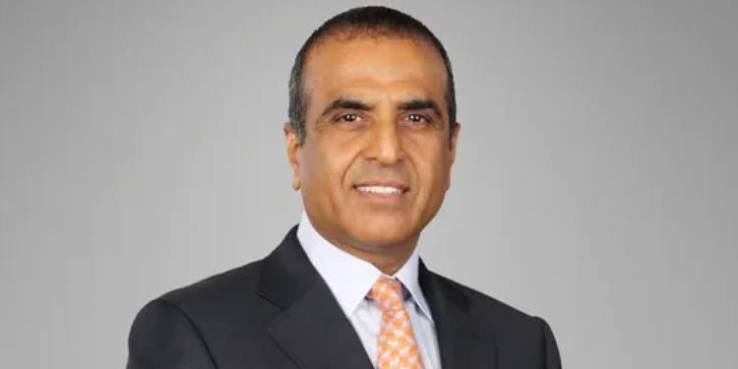
Sunil Mittal says Bharti ahead of Starlink in approval queue
New Delhi , October 14,2026: Bharti Enterprises Founder and Chairman Sunil Bharti Mittal has said his group is ahead of Elon Musk’s Starlink in the queue for regulatory approvals in India, asserting that Bharti has been waiting for clearance for years and is ready to roll out its satellite connectivity services.Speaking at the Bloomberg New Economy Forum, Mittal was asked about Musk’s recent remarks targeting India’s telecom billionaires in the context of Starlink’s plans to enter the Indian market.Responding to the question, Mittal said Bharti had applied for the necessary approvals five years ago and had its terrestrial network ready for the past three years. He added that the company’s satellites had been positioned over India for five years.
“We are all awaiting our approvals,” Mittal said, adding that Bharti was “significantly ahead of the queue” compared with Starlink.Mittal said India was at an advanced stage of preparations for satellite connectivity, with final security clearances being awaited. Once the approvals are granted, the company would be able to extend connectivity across the country, including areas that remain difficult to reach through conventional networks.He also highlighted Bharti’s experience in Africa, where satellite services have already been launched in partnership with a global provider. Emphasising the importance of digital infrastructure for economic growth, Mittal said taxes on digital goods and telecom services should be kept as low as possible to ensure that digital technology can serve as a multiplier for the economy.Turning to global trade and supply chains, Mittal said the international community had allowed China to establish a dominant position across several industries, including active pharmaceutical ingredients, automobile components and electronics.”Everybody is very happy that China produces high quality at low cost,” he said, pointing out that rising geopolitical tensions were now putting these supply chains and long-standing economic interdependence under pressure. Mittal said reducing dependence on China would be a difficult process for countries whose industries rely heavily on Chinese raw materials and components.Illustrating the challenge, he said a country with an annual trade deficit of USD 100 billion with China would find it difficult to reduce that figure to USD 50 billion because of its reliance on Chinese supplies across multiple sectors.He stressed that diversifying supply chains was necessary, but cautioned that the transition would take considerable time.”It’ll take a few decades,” Mittal said, adding that the world was increasingly recognising that while countries would remain economically interdependent, excessive dependence on a single country was not sustainable.The remarks come amid wider global efforts to diversify supply chains, strengthen economic resilience and reduce strategic vulnerabilities while maintaining international trade links.